
10Jul
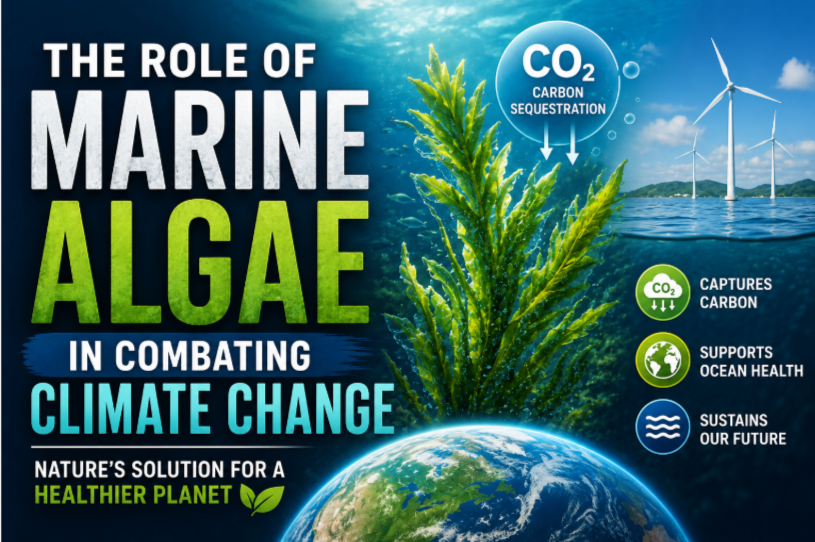
The Role of Marine Algae in Combating Climate Change
Climate change poses a critical challenge to the planet, driven largely by excess carbon dioxide in the atmosphere. While terrestrial forests are widely recognized for their carbon-capturing abilities, the ocean hosts a powerful, yet often overlooked, ally: marine algae. These underwater plants and microorganisms play a pivotal role in carbon cycling and could be a cornerstone in climate change mitigation strategies.
From microscopic phytoplankton to sprawling kelp forests, marine algae play a vital role in absorbing CO₂. By turning carbon into biomass, they help clean our oceans and lower greenhouse gases in the atmosphere.
How Marine Algae Capture Carbon
Marine algae absorb CO₂ dissolved in seawater. Microalgae in the open ocean, despite their small size, collectively account for roughly half of global photosynthesis. These tiny organisms convert carbon into sugars and oxygen, forming the foundation of marine food webs.
Kelp forests grow quickly, producing large amounts of biomass. Some of this eventually sinks to the deep ocean, storing carbon safely for decades and preventing it from returning to the atmosphere. This deep-sea deposition prevents CO₂ from returning to the atmosphere, making algae a natural carbon sink.
Moreover, algae influence ocean chemistry. By absorbing CO₂, they slightly reduce ocean acidity locally, which can benefit other marine life and ecosystems.
Practical Applications and Climate Solutions
The potential of marine algae extends beyond natural carbon sequestration:
- Algae Biofuel: Algae biomass can be converted into renewable biofuels, replacing fossil fuels and reducing net CO₂ emissions.
- Carbon Capture Enhancements: Scientists are exploring ways to cultivate algae at scale in open-ocean farms, increasing carbon capture efficiency.
- Bioproducts: Algae can be processed into biodegradable plastics, feedstocks, and fertilizers, indirectly reducing industrial carbon emissions.
These applications illustrate how marine algae can be both a direct and indirect solution to climate change, combining ecosystem services with practical human use.
Challenges in Using Algae for Climate Mitigation
Despite their potential, relying on algae for carbon sequestration is not without challenges. Scaling algae cultivation in oceans must account for ecological balance, nutrient requirements, and potential effects on marine biodiversity. Additionally, the permanence of carbon storage depends on whether biomass reaches deep ocean sinks rather than decomposing near the surface.
Monitoring and governance are critical. Large-scale algae farms require careful management to ensure they do not disrupt local ecosystems or fisheries.
Policy and Research Implications
Research into marine algae as a climate solution is growing. Policymakers and environmental organizations are beginning to recognize blue carbon ecosystems as vital components of national climate strategies. Supporting algae restoration and cultivation projects can provide measurable carbon reductions while enhancing marine biodiversity.
International frameworks like the UN Decade of Ocean Science emphasize integrating natural carbon sinks into climate action plans. Marine algae, with its dual role in carbon capture and ecosystem support, aligns closely with these initiatives.
Conclusion
Marine algae offer a promising avenue for combating climate change. From microscopic phytoplankton to sprawling kelp forests, these organisms capture and store carbon, supporting natural oceanic cycles and climate mitigation strategies. While challenges remain in scaling and governance, algae-based solutions illustrate the potential of nature-based approaches to complement technological carbon capture methods.
Harnessing the power of marine algae represents both an ecological and practical opportunity: enhancing carbon sequestration, supporting marine ecosystems, and contributing to a sustainable climate future.
Explore more about ocean science and blue carbon initiatives at Oceanography
FAQs
1. How do marine algae help mitigate climate change?
Ans: Marine algae absorb CO₂ through photosynthesis, converting it into biomass and storing carbon in ocean ecosystems.
2. What is blue carbon?
Ans: Blue carbon refers to carbon captured and stored in coastal and marine ecosystems like seagrass beds, mangroves, and seaweed forests. Learn more on Blue Carbon Initiative – Ocean Carbon Solutions
3. Can algae be cultivated for carbon capture?
Ans: Yes, ocean-based algae farms are being researched as scalable carbon sequestration and biofuel production systems.
4. What types of algae sequester the most carbon?
Ans: Both phytoplankton and macroalgae like kelp contribute significantly, with kelp forests storing large amounts of biomass in deep ocean sinks.
5. Are algae-based solutions safe for ecosystems?
Ans: When carefully managed, algae cultivation supports marine biodiversity and contributes to ecosystem health.
6. How fast do kelp forests grow?
Ans: Kelp can grow several inches per day under ideal conditions, making them one of the fastest-growing organisms on Earth.
7. What challenges exist for algae carbon projects?
Ans: Challenges include ecological balance, nutrient needs, monitoring, and ensuring long-term carbon storage in the deep ocean.
8. Can algae replace fossil fuels?
Ans: Algae biofuels are promising but cannot fully replace fossil fuels yet; they are a complementary climate solution.
9. Where can I learn more about marine algae research?
Ans: For ocean science and algae research updates, visit NOAA
10. How can individuals support algae-based climate solutions?
Ans: Support sustainable seafood, blue carbon initiatives, and organizations promoting marine ecosystem restoration.
